

Pigmentation & Age Spots
Target stubborn pigmentation and achieve a clearer, brighter and more even-looking complexion.
Pigmentation is an extremely common skin concern, but not every brown mark is the same. Pigmentation can appear as one clearly defined patch, several individual age spots, scattered sun damage or marks left behind after breakouts and inflammation.
The most effective treatment will depend on the type of pigmentation, its location, how deep it sits within the skin and what may have caused it.
Have You Noticed Any of These Concerns?
- Individual brown or darker patches
- Age spots on the face, hands or body
- Scattered pigmentation or sun damage
- Freckle-like clusters that become darker in the sun
- Marks remaining after breakouts
- An uneven or dull-looking complexion
Pigmentation can look similar on the surface while requiring very different treatment underneath. This is why the skin must be properly assessed before deciding how to treat it.
What Causes Pigmentation?
Pigmentation develops when the skin produces or distributes too much melanin—the pigment responsible for giving our skin, hair and eyes their colour.
This can be influenced by:
- Sun and UV exposure
- Hormonal changes
- Breakouts and inflammation
- An injury or trauma to the skin
- Genetics
- Certain health conditions or medications
Understanding the likely cause and pattern of pigmentation helps me select the safest and most effective treatment for your skin.
Not All Pigmentation Is the Same
Pigmentation can appear in different ways and may have different causes. Correctly identifying the type of pigmentation is important because the most suitable treatment will vary.
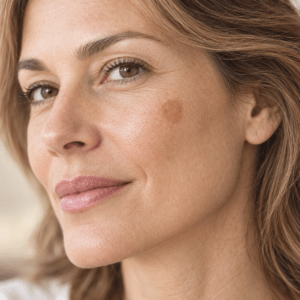
Age Spots and Sun Spots
Age spots are usually flat, brown and clearly defined. They commonly develop on areas regularly exposed to the sun, including the face, chest, arms and hands.
Depending on their size, location and suitability, individual age spots may be treated using Advanced Electrolysis, while multiple or scattered sun spots may respond better to IPL Skin Rejuvenation.
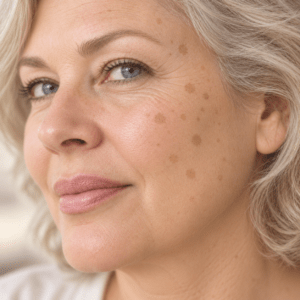
Scattered Sun Pigmentation
Sun exposure can create clusters of smaller marks or an uneven distribution of pigment across a wider area.
Because this pigmentation is scattered rather than confined to one individual mark, IPL, chemical peels or microneedling may be more appropriate than treating every mark separately.

Post-Inflammatory Hyperpigmentation
Post-inflammatory hyperpigmentation, often shortened to PIH, is the flat discolouration that can remain after the skin has experienced inflammation or injury.
It commonly develops after breakouts, picking, irritation, burns or other forms of trauma. These marks are not necessarily scars—a scar changes the skin’s texture, whereas PIH changes its colour.
Depending on the skin and the cause of the pigmentation, chemical peels, microneedling or IPL may be recommended.
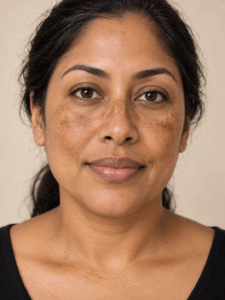
What About Melasma?
Melasma is a more complex form of pigmentation that commonly appears as symmetrical patches across the cheeks, forehead, nose or upper lip. It is often influenced by hormonal changes and can be aggravated by sun exposure.
Unlike an individual sun spot, melasma cannot simply be removed as one isolated lesion. It can often be managed and improved, but it may be persistent and can return. Some treatments may also aggravate melasma if they are not suitable for the individual’s skin.
For this reason, I will always assess your pigmentation carefully before recommending treatment. If I suspect melasma, I will explain the safest next steps and may recommend seeking advice from your GP or a dermatologist.
When Should Pigmentation Be Checked?
Most pigmentation is harmless, but I will not treat an area if I am uncertain about what it is or if it appears unsuitable for cosmetic treatment.
Any new or unusual mark, or an existing mark that has changed in size, shape or colour, should be assessed by your GP or a dermatologist before treatment. This also applies to areas that are painful, itchy, bleeding, inflamed or crusting.
Your safety will always come first, and medical confirmation may be requested before I proceed.

How Can I Help?
With over 10 years of experience and Level 5 qualifications in advanced skin treatments, I can assess the colour, pattern, location and appearance of your pigmentation before recommending a treatment plan tailored to you.
Rather than using one treatment for every brown mark, I will consider whether the pigmentation is isolated or scattered, what may have caused it and whether it is accompanied by other concerns such as uneven texture, enlarged pores or acne scarring.
Your plan may involve treating one isolated patch, improving scattered pigmentation across a wider area or combining treatments to target both the pigmentation and the overall condition of your skin.
Recommended Treatments
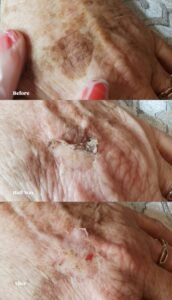
Advanced Electrolysis
Advanced Electrolysis may be recommended for individual, clearly defined areas of benign pigmentation or age spots that have been assessed as safe and suitable for treatment.
A fine probe applies controlled heat precisely to the targeted area. The pigmentation may initially appear darker and a small crust can form before naturally lifting away as the skin heals.
Best for: Individual age spots and small, clearly defined areas of suitable pigmentation.

Chemical Peels
A professional chemical peel encourages exfoliation and healthy skin-cell renewal, helping to gradually improve superficial pigmentation, post-inflammatory marks and uneven skin tone.
The treatment is customised to your skin, and a course will usually provide a more noticeable improvement than one appointment alone.
Best for: Superficial pigmentation, post-inflammatory marks and uneven tone.
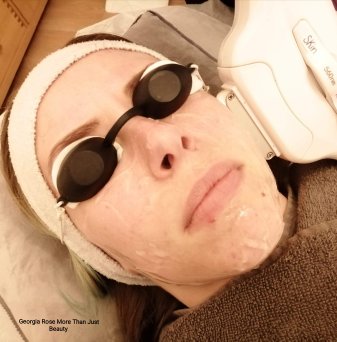
IPL Skin Rejuvenation
IPL uses controlled pulses of light that are absorbed by pigment within the skin. This can help break down visible pigmentation so that it gradually darkens, lifts and becomes less noticeable.
Because IPL can treat a wider area, it is particularly useful for scattered sun spots, uneven pigmentation and visible sun damage.
Best for: Multiple sun spots, scattered pigmentation and larger treatment areas.
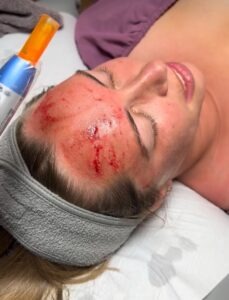
Microneedling
Microneedling stimulates the skin’s natural repair and renewal processes. It may be particularly beneficial when pigmentation is accompanied by uneven texture, enlarged pores, post-breakout marks or acne scarring.
Because the skin improves progressively, microneedling is generally recommended as a course of treatments rather than a quick removal method.
Best for: Post-inflammatory pigmentation accompanied by texture or scarring.
Which Treatment Is Right for Me?
If you have one or two clearly defined age spots or isolated areas of suitable pigmentation, Advanced Electrolysis may be the most direct option.
If the pigmentation is scattered across a wider area, IPL Skin Rejuvenation may provide a more even and efficient treatment.
Chemical peels may be recommended for superficial pigmentation and uneven tone, while microneedling may be more suitable when pigmentation appears alongside post-breakout marks, scarring or changes in texture.
Sometimes a combination provides the best overall result. For example, an isolated pigmentation patch could be treated first using Advanced Electrolysis. Once the skin has fully healed, a course of microneedling or chemical peels may be considered to improve the surrounding tone and texture.
Your consultation allows me to select the treatment—or combination of treatments—that best suits your skin.
FAQ
Most frequent questions and answers
No. Pigmentation has many different causes and not every type will respond safely to the same treatment.
I will assess the area before proceeding. If the pigmentation appears unsuitable, unclear or requires medical assessment, I will explain this rather than treating it unnecessarily.
This can be a normal part of the healing process.
Pigmentation treated with IPL may temporarily darken before gradually lifting or flaking away. Advanced Electrolysis can produce a small crust that must be allowed to heal and fall away naturally.
You will receive full aftercare instructions and should never pick, scratch or remove any crusting yourself.
Once an individual mark has been successfully treated, it may clear significantly. However, new pigmentation can develop and some types may gradually return, particularly when influenced by sun exposure, inflammation or hormones.
Consistent home care and daily sun protection are essential for protecting your results and reducing further pigmentation.
Not always. Post-inflammatory hyperpigmentation is usually a flat change in the colour of the skin left behind after a breakout or inflammation.
A true scar creates a change in the skin’s texture, such as a dip, pit or raised area. Some clients have both pigmentation and scarring, which may require a combination treatment plan.
Any mark that is new, changing in size, shape or colour, bleeding, itching, crusting or otherwise concerning should be medically assessed.
I do not diagnose skin cancer or suspicious lesions. If I am uncertain about a mark, I will not treat it until appropriate medical confirmation has been provided.
Ready to Start Your Pigmentation Journey?
Book a consultation and I will assess your pigmentation, discuss what you would like to improve and recommend the most suitable treatment plan.
If the pigmentation is not suitable for cosmetic treatment or needs to be medically assessed first, I will always explain this honestly.
Your £30 consultation fee is fully redeemable against your first treatment.
Follow Me
✔ One-to-one personalised care
✔ Private clinic setting
✔ Free parking available
✔ Card & cash accepted
Clinic Hours
Monday - 1:00pm - 6:00pm
Tuesday - Thursday 10:00am - 7:00pm
Friday : 9:00am - 2:00pm
Saturday - Sunday : CLOSED
Find me
23 Jellicoe Avenue
Gosport, Hampshire
PO12 2PA
Phone: 07428 595979
Email: georgiaballard23@gmai.com
Privite home clinic - appointment only